How Social Media Is Changing Political Communication and Public Debate

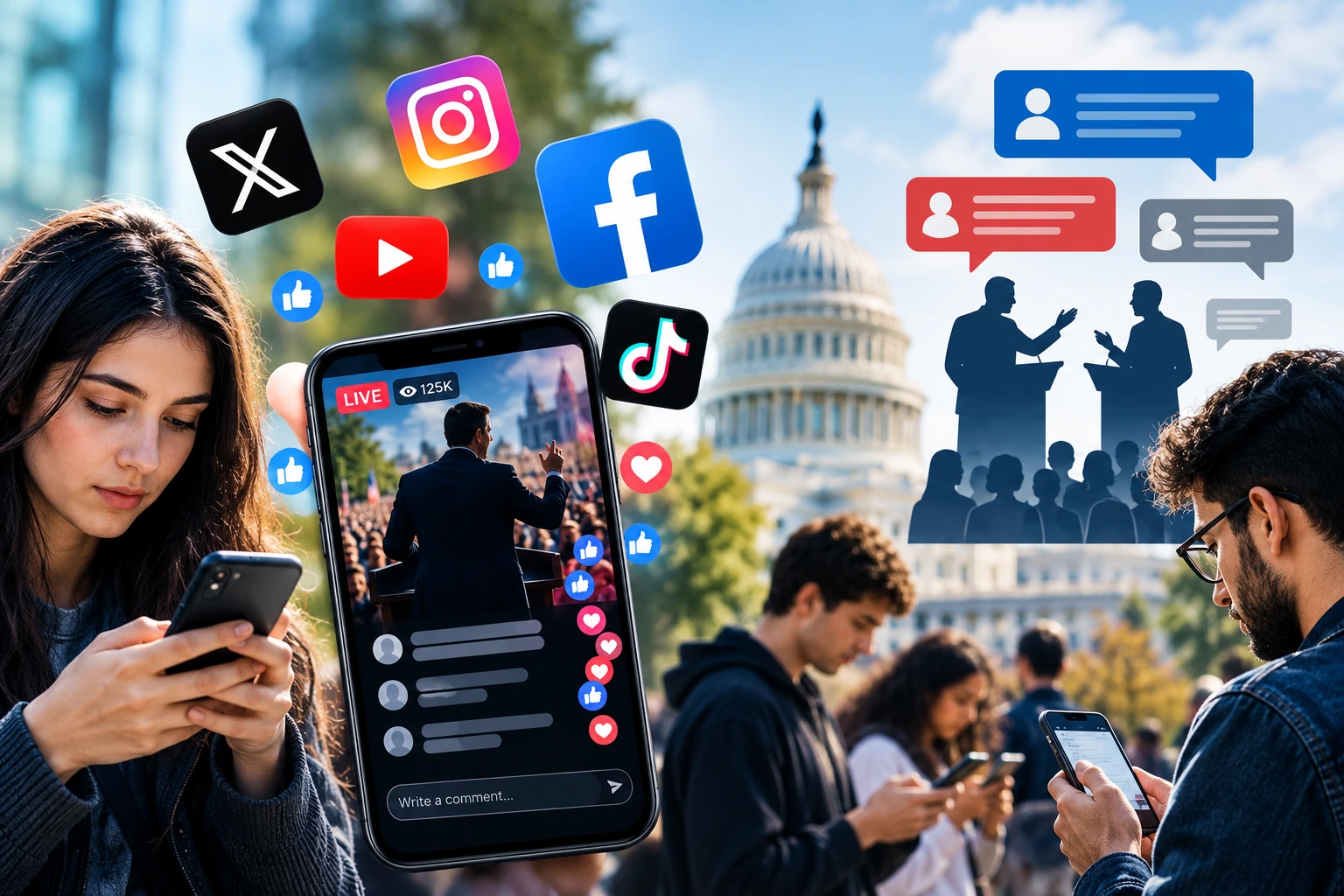
Social media has become an important part of modern political communication. Platforms such as Facebook, Instagram, YouTube, TikTok, X, and other digital networks allow politicians, journalists, organizations, and ordinary citizens to communicate with large audiences almost instantly. Instead of relying entirely on newspapers, television, radio, or official speeches, people can now encounter political information while scrolling through their everyday social media feeds.
Direct Communication Between Politicians and the Public
One of the biggest changes brought by social media is the ability of political figures to communicate directly with the public. A politician can publish a statement, video, photograph, livestream, or response without waiting for traditional media organizations to report on it.
This direct communication can make political messaging faster and more accessible. Citizens can also respond immediately through comments, reposts, questions, and other forms of engagement.
The communication process is therefore no longer limited to a one-way relationship between political institutions and audiences. Social media creates a continuous flow of posts, reactions, discussions, and responses.
Political Information Is Becoming More Visual
Political communication has also become increasingly visual. Short videos, infographics, photographs, livestreams, and brief posts can communicate information quickly.
Different platforms encourage different communication styles. A long policy explanation may be adapted into a short video or a series of posts designed for mobile users. This can make complex subjects easier to approach, but it can also reduce the amount of context available to audiences.
Research from Pew Research Center shows that people encounter political content differently depending on the platform they use. In a 2024 survey of U.S. adult internet users, 59% of X users said keeping up with politics or political issues was a reason they used the platform, compared with 36% of TikTok users and 26% each of Facebook and Instagram users.
Citizens Can Participate More Easily
Social media has lowered some barriers to political participation. People can share information, discuss public issues, organize events, communicate with community groups, and express their views without owning a traditional media outlet.
A 2025 Pew Research Center survey found that 42% of U.S. social media users considered these platforms at least somewhat important for getting involved with political or social issues, while 34% said they were important for giving them a place to express political opinions.
This illustrates how social networks can function as spaces for civic discussion as well as personal communication.
The Role of Algorithms
Another major change is the use of recommendation and ranking systems. Social media feeds are generally personalized based on factors such as previous interactions, interests, and engagement.
As a result, two people can use the same platform while encountering very different political content. Personalized feeds can help users discover subjects they care about, but they may also limit exposure to information outside their existing interests.
This makes it increasingly important for users to consider where information comes from and whether a post provides supporting evidence.
The Challenge of Misinformation
The speed of social media can also make it difficult to distinguish reliable information from inaccurate or misleading claims. A post can spread widely before journalists, researchers, authorities, or other users have an opportunity to verify it.
Political content can be particularly sensitive because misleading information may influence how people understand public events or policy discussions. Users can reduce the risk of accepting inaccurate information by checking the source, looking for supporting evidence, and comparing important claims with reliable independent sources.
Public Debate Is More Immediate
Traditional public debate often takes place through scheduled interviews, debates, editorials, or public meetings. Social media has made political discussion more immediate.
A statement can generate thousands of responses within minutes. Supporters, critics, journalists, commentators, and organizations may all contribute to the same conversation.
This can increase visibility for issues that might otherwise receive limited attention. Pew Research Center reported in 2025 that 69% of U.S. adults said social media highlights important issues, while the same share said it helps give underrepresented groups a voice.
At the same time, fast-moving conversations can sometimes prioritize short reactions over detailed discussion.
The Importance of Digital Literacy
As political communication continues to move online, digital literacy becomes increasingly important. Users need to understand how to evaluate sources, recognize opinion and commentary, identify edited or incomplete content, and distinguish verified information from unsupported claims.
Reading beyond a headline, checking the date of a post, examining the source, and comparing multiple reliable sources are useful habits.
Conclusion
Social media has changed political communication by making it faster, more direct, visual, interactive, and accessible. It gives political figures new ways to communicate and gives citizens more opportunities to participate in public discussions.
At the same time, personalized feeds, misinformation, limited context, and highly reactive conversations create challenges for informed debate. The role of social media in politics will continue to evolve as technology, platforms, media organizations, and users adapt.